Speed Painting BattleTech: Paint a Full Lance in One Evening

You've got a game tomorrow and four grey plastic 'Mechs staring at you from the table. You don't have time for a multi-session painting project. You need these things table-ready by tonight. Sound familiar?

Speed painting isn't about cutting corners—it's about using efficient techniques that produce the best possible results in the shortest time. BattleTech miniatures are perfect candidates for speed painting because of their small scale, mechanical geometry, and the fact that they're viewed from arm's length during gameplay. A speed-painted lance that took 2-3 hours looks just as good on the table as models that took 10 hours each.

This guide covers three speed painting methods, from fastest to most refined, with realistic time estimates for a full lance of four 'Mechs.

[Ad Space - 728x90]

Method 1: The 90-Minute Lance (Primer + Wash + Drybrush)

This is the absolute fastest method that still produces good-looking results. Total time: about 90 minutes of active painting for four 'Mechs, plus drying time.

What You Need

  • Colored spray primer matching your faction (e.g., blue for Steiner, red for Kurita)
  • One pot of wash (Nuln Oil or Agrax Earthshade)
  • One lighter shade of your base color for drybrushing
  • Metallic silver paint
  • A small detail brush and a large drybrush

Step-by-Step Process

Step 1 — Colored Primer (10 min active + 30 min dry): Prime all four 'Mechs with colored spray primer. This is both your primer AND base coat in one step, cutting your painting time roughly in half. Army Painter makes colored primers in most faction-appropriate colors. Shake the can thoroughly, spray thin even coats from 10-12 inches away.

Step 2 — Metallics (15 min): While the primer dries, set up your workspace. Once dry, quickly paint all weapon barrels, joints, and mechanical details with metallic silver. Don't be precise—slightly messy metallics actually look more realistic. Do all four 'Mechs assembly-line style.

Step 3 — Full Wash (10 min active + 20 min dry): Slap a generous coat of wash over the entire model. Every model, every surface. The wash flows into panel lines and recesses, creating instant depth and shadows. This is the single step that transforms "painted with primer" into "painted miniature."

Step 4 — Drybrush (15 min): Once the wash is fully dry, load a large flat brush with a lighter shade of your base color, wipe most of it off on paper towel, and sweep it across all raised surfaces. This creates highlights on edges and flat panels. Two minutes per 'Mech.

Step 5 — Cockpit Dot (5 min): One tiny dot of bright green, blue, or red on each cockpit viewport. This five-second detail per 'Mech makes a disproportionate visual impact. Suddenly the machine looks alive.

Step 6 — Quick Base (15 min): PVA glue on bases, dip in sand or basing material, shake off excess. Once dry, wash with Agrax Earthshade. Done.

Method 2: The Contrast/Speedpaint Method (2 hours)

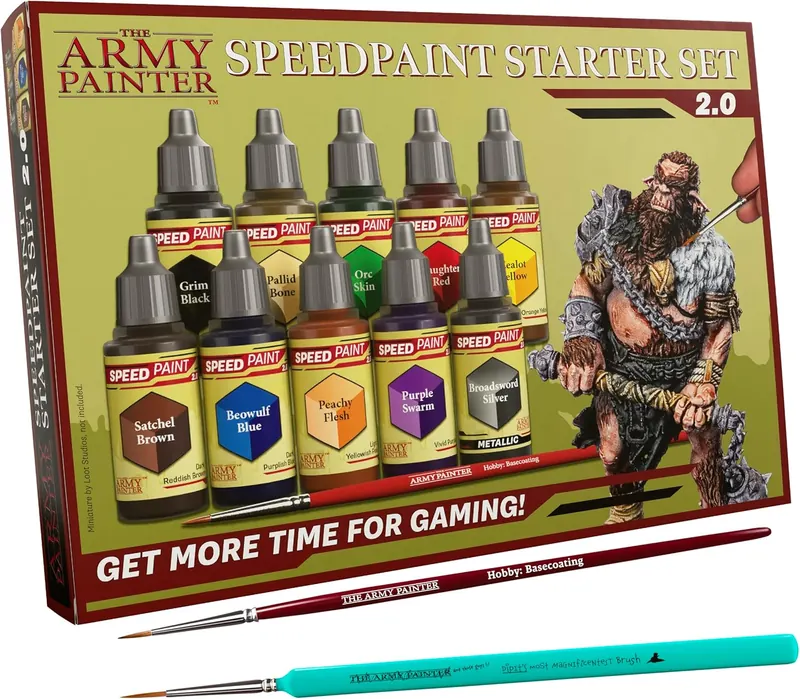
Contrast paints (Citadel) and Speedpaints (Army Painter) are one-coat paints designed specifically for speed painting. They combine a base coat, shade, and highlight in a single application by flowing into recesses (creating shadows) while leaving a lighter tint on raised areas.

How Contrast/Speedpaints Work

These paints are translucent and heavily pigmented. Applied over a light primer (white or light grey), they tint the raised surfaces while pooling dark in the recesses. The result is a painted miniature with built-in shading from a single coat. It's not magic—the results depend on technique—but it's the most efficient single-coat method available.

Step-by-Step Process

Step 1 — White or Light Grey Primer (10 min + dry): Contrast paints require a light undercoat to work properly. White primer gives the most vibrant colors; light grey (like Citadel Grey Seer or Wraithbone) gives slightly warmer or cooler tones. Prime all four 'Mechs.

Step 2 — Zenithal Highlight (Optional, 5 min): For better results, after the primer dries, spray white primer from directly above at a 45-degree angle. This creates a natural light-to-dark gradient that contrast paints enhance further. It's optional but adds noticeable quality for 5 minutes of work.

Step 3 — Apply Contrast Paint (30 min): Load your brush and apply contrast paint to all armor panels. The key technique is to apply it in a single, confident stroke per panel. Don't go back over areas that are still wet—this causes pooling and tide marks. Let gravity help the paint flow into recesses naturally. Work one panel at a time.

Step 4 — Second Color for Accents (15 min): Apply a different contrast paint for secondary panels, weapons, or accent areas. For example, a military green contrast over the body with a dark brown contrast on weapons and joints.

Step 5 — Metallics and Details (20 min): Regular metallic paint over weapon barrels, cockpit dots, and any small details you want to pop. Contrast paints don't work for metallics, so this step uses traditional paint.

Step 6 — Basing (15 min): Same as Method 1—glue, sand/material, wash.

Best Contrast Paints for BattleTech Factions

Faction Citadel Contrast Army Painter Speedpaint
Davion Ultramarines Blue Ultramarine Blue
Steiner Leviadon Blue Midnight Cloak
Kurita Blood Angels Red Poppy Red
Liao Dark Angels Green Absolution Green
Marik Shyish Purple Hive Dweller Purple
Mercenary Camo Militarum Green + Aggaros Dunes Camo Cloak + Zealot Yellow

Method 3: Assembly Line Batch Painting (3-4 hours)

This method produces the best-looking speed results by applying traditional techniques in an efficient batch process. Instead of painting one 'Mech to completion, you do each step on all four 'Mechs before moving to the next step. This is how professional commission painters work.

Why Batch Painting Is Faster

  • Fewer brush changes: You load one color and apply it to all models before switching
  • Drying time overlap: While 'Mech #4 gets its wash, 'Mech #1 is already dry
  • Muscle memory: Repeating the same stroke four times makes you faster each time
  • Consistent results: All 'Mechs get the same treatment, creating a cohesive force

The Batch Painting Workflow

Phase 1 — Prep and Prime (15 min + dry): Clean, prime, let dry. Same as always.

Phase 2 — Base Coat All Models (40 min): Main armor color on all four 'Mechs. Two thin coats, letting the first dry while you work on other models. By the time you finish the first coat on 'Mech #4, 'Mech #1 is dry for the second coat.

Phase 3 — Secondary Colors (30 min): Paint all secondary panels, accents, and contrasting areas on all four models. Same assembly-line approach—one color at a time across all models.

Phase 4 — Metallics (20 min): All weapon barrels, joints, exhaust vents, and mechanical details on all models. Silver/gunmetal first, then gold/bronze accents if your scheme uses them.

Phase 5 — Wash All Models (15 min + dry): Full wash on all four 'Mechs. This is the most satisfying step in batch painting—watching four models transform simultaneously.

Phase 6 — Drybrush and Highlights (30 min): Lighter shade drybrushing on all raised edges. Then pick out cockpits and any final details. This is where the models really come together.

Phase 7 — Basing (20 min): Texture paste or PVA + sand on all bases, paint, wash, optional static grass.

Speed Painting Tips That Actually Work

1. Limit Your Color Palette

Speed painting works best with 3-5 colors maximum. The more colors you use, the more brush changes and the longer each model takes. A two-color scheme (base + accent) with metallic details and a wash looks clean and professional. Complex camo patterns are the enemy of speed.

2. Embrace "Good Enough"

Speed painting means accepting imperfection. That slightly misaligned edge highlight? Invisible from 3 feet away. The wash that pooled a little heavy on one knee joint? Looks like battle damage. Your internal critic will scream; ignore it. Gaming-distance quality is the goal.

3. Use Your Primer as a Color

If your scheme is primarily one color, prime in that color. A Steiner force primed in blue needs only metallics, wash, and highlights—no base coat step. This alone saves 30+ minutes per lance.

4. Invest in a Wet Palette

A wet palette keeps your paint from drying out during long painting sessions. Make one for free: put a damp paper towel in a tupperware container, lay parchment paper on top. Your paints stay workable for hours instead of drying in minutes.

5. Paint While Watching Something

Seriously. Put on a BattleTech lore video, a podcast, or a movie. Batch painting is repetitive enough that your hands work on autopilot once you've done the first model. The entertainment makes the time fly.

6. Don't Skip the Wash

Even in the fastest speed paint method, the wash is non-negotiable. It's the single highest-impact step for time invested. Five minutes of wash application adds more visual quality than 30 minutes of detail work.

Speed vs. Quality: Setting Expectations

Method Time per Lance Quality Level Best For
Method 1 (Primer+Wash+Dry) 90 min Tabletop (6/10) Game tomorrow, bulk forces
Method 2 (Contrast) 2 hours Tabletop+ (7/10) Bright schemes, quick results
Method 3 (Batch) 3-4 hours Good Tabletop (8/10) Best results for time invested
Full quality painting 8-12+ hours Display (9-10/10) Showcase models, competitions

For most BattleTech players, Method 3 (batch painting) hits the sweet spot. You spend one evening painting and end up with a force that looks genuinely good. Method 1 is your emergency option when time is critical. Method 2 is excellent for bright, clean faction schemes.

Remember: a painted army on the table always looks better than an unpainted one, regardless of method. The best painting technique is the one that gets your 'Mechs out of the grey plastic pile and onto the battlefield.

🎨 Speed Painting Essentials

Get everything you need for speed painting in one purchase:

  • Army Painter Speedpaint Starter Set (~$35) — 10 contrast-style paints
  • Colored spray primer in your faction color (~$10)
  • Large drybrush (~$5)
View Speed Paint Sets on Amazon →
[Ad Space - 728x90]

Related Articles