Lance Building Guide: Composition, Roles, and Tactics

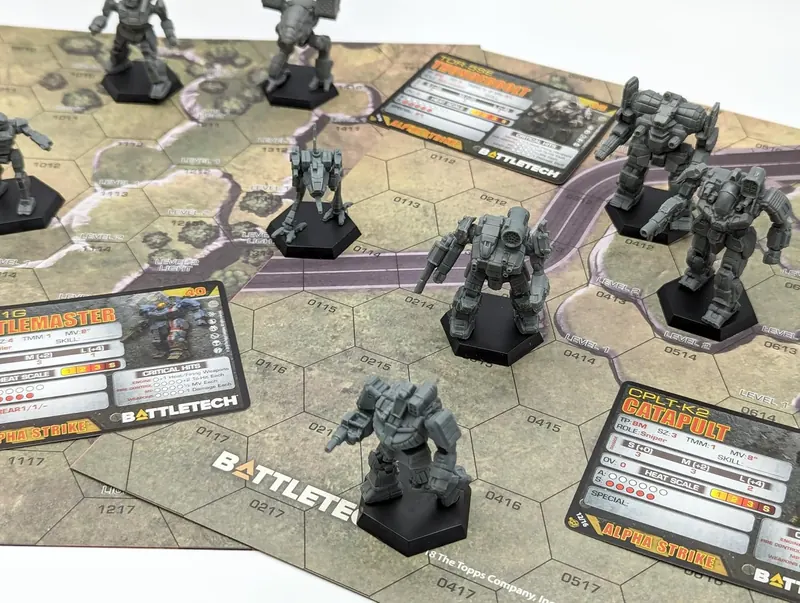
A lance is the fundamental tactical unit in BattleTech—four 'Mechs operating together as a coordinated force. While individual 'Mech skill matters, lance composition is what wins games consistently. A well-built lance where each 'Mech supports the others will outperform four individually powerful 'Mechs that don't work together.

This guide covers everything you need to build effective lances: the four core roles, tonnage considerations, sample compositions for different playstyles, and the tactical principles that make a lance greater than the sum of its parts.

[Ad Space - 728x90]

Understanding the Four Core Roles

Every effective lance needs 'Mechs that fulfill specific tactical roles. You don't need exactly one of each—some lances double up on roles—but understanding what each role does helps you build a force that covers its weaknesses.

1. Scout/Flanker

Typical Weight: 20-35 tons (Light 'Mechs)
Key Stats: High movement (6/9 or faster), jump jets preferred
Job: Move fast, spot enemies for your fire support 'Mechs, harass flanks, finish wounded targets, and capture objectives.

The scout doesn't need to kill things—it needs to survive and create opportunities. A Jenner racing behind enemy lines forces your opponent to turn 'Mechs around to deal with it, breaking their formation. A Commando finishing off a crippled assault 'Mech frees your heavier units to engage fresh targets.

Common mistake: sending your scout to fight 'Mechs it can't handle. Your Locust is not going to solo an Atlas. Use it to spot, flank, and pick off damaged enemies—not to charge headlong into superior firepower.

2. Striker

Typical Weight: 40-55 tons (Medium 'Mechs)
Key Stats: Balanced speed and firepower, jump jets very useful
Job: The workhorse that deals reliable damage turn after turn. Strikers are versatile fighters that can adapt to changing battlefield conditions.

Good strikers like the Shadow Hawk, Wolverine, and Hunchback are effective at multiple ranges and can shift between aggressive pushing and defensive holding. They're your most flexible assets—use them where the fight is hottest.

A lance typically has one or two strikers. They're your adaptable middle, able to support the scout in flanking actions or stand alongside the anchor in a defensive line.

3. Fire Support

Typical Weight: 55-75 tons (Medium to Heavy 'Mechs)
Key Stats: Long-range weapons (LRMs, Large Lasers, PPCs, AC/5s)
Job: Deal damage from range, soften targets before they reach your line, provide indirect fire support through spotters.

Fire support 'Mechs like the Catapult, Archer, and Jagermech sit behind your front line and rain damage on enemies from afar. Their LRM barrages and long-range energy weapons wear opponents down before the close-range brawl begins.

Positioning is critical for fire support. You want elevation (for attack bonuses), clear sight lines, and enough distance that enemies can't easily close to knife-fight range. A Catapult on a hill with good sightlines can dominate a game; the same Catapult caught in close combat is a liability.

4. Anchor/Brawler

Typical Weight: 65-100 tons (Heavy and Assault 'Mechs)
Key Stats: High armor, close-to-medium range weapons, physical attack capability
Job: Hold the line, absorb fire that would destroy lighter 'Mechs, dominate close-range engagements, and be the immovable center of your formation.

Your anchor is the 'Mech that says "this area is mine." An Atlas, Battlemaster, or Awesome standing in a chokepoint forces enemies to either deal with 85-100 tons of angry BattleMech or go around—and going around means exposing flanks to your striker and fire support.

Anchors don't need to kill everything—they need to survive and hold position. Every turn an enemy spends trying to bring down your Thunderbolt is a turn they're not shooting your Catapult or chasing your Jenner.

Tonnage Balance and Battle Value

Tonnage Guidelines

Standard BattleTech games are often played with tonnage limits. Common formats:

FormatTonnageTypical Composition
Light Lance~120-150 tons4 lights or 3 lights + 1 medium
Medium Lance~180-220 tonsMixed medium force
Standard Lance~200-260 tonsClassic mixed-weight lance
Heavy Lance~260-300 tonsHeavy-focused force
Assault Lance~300-400 tonsThe Steiner Scout Lance experience

Battle Value (BV) Balancing

Battle Value is BattleTech's points system for balanced games. Each 'Mech variant has a BV score that accounts for its weapons, armor, speed, and effectiveness. Using BV instead of tonnage creates more balanced games because it accounts for quality, not just quantity.

A common BV limit for lance-on-lance games is 4,000-6,000 BV per side. You can look up BV values on Sarna.net or in the Master Unit List (both free online resources). BV favors efficient designs over raw tonnage, meaning a well-chosen medium lance can match a poorly chosen heavy lance point-for-point.

Sample Lance Compositions

The Balanced Lance (~220 tons)

Role'MechTonsJob
ScoutCommando COM-2D25Flank, spot, finish wounded
StrikerShadow Hawk SHD-2H55Flexible fighter, mid-range
Fire SupportCatapult CPLT-C165LRM rain from back line
AnchorThunderbolt TDR-5S65Hold the line, absorb fire

Strengths: Covers all ranges, all roles filled, very forgiving of mistakes. Weakness: No single overwhelming threat.

The Aggressive Brawl Lance (~230 tons)

Role'MechTonsJob
FlankerWolverine WVR-6R55Aggressive flanking with SRM-6
BrawlerHunchback HBK-4G50AC/20 devastation at close range
StrikerCenturion CN9-A50Shield arm + AC/10, push forward
AnchorOrion ON1-K75Heavy firepower, tough armor

Strengths: Devastating at close range, enemy dreads the approach. Weakness: Vulnerable to long-range kiting—opponents can pick you apart before you close distance. Use terrain to close quickly.

The Fire Support Lance (~250 tons)

Role'MechTonsJob
SpotterRaven RVN-3L35TAG/NARC spotting for missiles
Fire SupportCatapult CPLT-C165LRM-15 barrage
Fire SupportArcher ARC-2R70LRM-20 barrage
AnchorWarhammer WHM-6R70PPC fire + close defense

Strengths: Overwhelming ranged firepower, enemies take damage for 3-4 turns before reaching you. Weakness: If fast enemies close the gap, your fire support 'Mechs become much less effective. Protect the Raven—it's your eyes.

The Speed Lance (~150 tons)

Role'MechTonsJob
ScoutJenner JR7-D35Fast striker with SRM-4s
StrikerFirestarter FS9-H35Flamers and close combat
FlankerWolfhound WLF-135Energy boat, no ammo concerns
HarasserSpider SDR-5V30Jump jets, harassment, objective grabbing

Strengths: Incredibly fast, hard to pin down, excellent for objective-based scenarios. Weakness: Cannot stand and fight against anything heavy. You must hit-and-run—if you get cornered, you die. Requires experience to pilot effectively.

Common Lance Building Mistakes

1. All Eggs in One Basket

Spending 80% of your tonnage on one assault 'Mech and filling the rest with light 'Mechs. Your Atlas gets focused down by the entire enemy lance while your Locusts watch helplessly. Spread your tonnage—a balanced force survives better than a top-heavy one.

2. No Fire Support

Four brawlers that all want to be at close range means you take free damage during the approach. At least one 'Mech should be effective at long range to punish enemies who stand still or cluster together.

3. No Speed

Four slow heavies and assaults can't reposition, can't flank, and can't chase down wounded enemies. At least one fast 'Mech gives you flexibility and prevents enemies from simply kiting your entire force.

4. Ignoring Ammunition

A lance of four AC/20 carriers sounds devastating until they all run out of ammo on turn 6. Mix energy and ballistic/missile weapons to ensure you still have teeth in long games.

5. Duplicate Weaknesses

Four PPC carriers all struggle with minimum range. Four LRM boats all crumble in close combat. Variety in weapon types means variety in capability—your lance should handle any range bracket.

Tactical Principles for Lance Warfare

Focus Fire

The most important tactical principle in BattleTech: concentrate your fire on one enemy 'Mech at a time. A dead 'Mech deals zero damage. A damaged 'Mech often deals full damage. It's always better to destroy one enemy and leave three at full strength than to lightly damage all four.

Mutual Support

Keep your 'Mechs within support range of each other. If your scout gets jumped by two enemy 'Mechs, can your striker get there in time to help? If your fire support gets flanked, is your anchor close enough to intervene? Lances that spread too thin get defeated in detail.

Use Terrain

Terrain is your fifth lance member. Hills give elevation bonuses. Forests provide partial cover. Buildings block line of sight. Use terrain to protect your advance, enhance your fire positions, and deny enemy advantages. A Hunchback advancing through city streets is far more dangerous than one crossing open ground.

Control the Tempo

Decide whether you're attacking or defending and commit to it. An aggressive lance should advance together, closing range as fast as terrain allows. A defensive lance should choose a strong position and make the enemy come to you. Lances that can't decide what they're doing end up doing nothing well.

🎯 Build Your First Lance

The "A Game of Armored Combat" box contains 8 'Mechs—enough for two complete lances. Everything you need for your first lance-on-lance game.

Get Started on Amazon →
[Ad Space - 728x90]

Related Articles