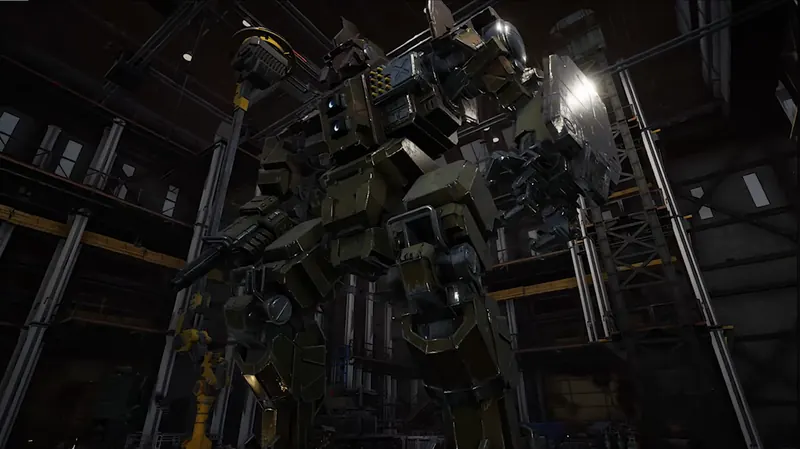
So You Want to Play BattleTech
Someone handed you a miniature, or you stumbled across a YouTube video of giant robots blasting each other on a hex grid, or a friend kept going on about their Atlas until you finally gave in. However you got here — welcome. You've found one of the best tabletop wargames ever made.
BattleTech isn't the flashiest game on the shelf. The box art isn't going to stop anyone in their tracks at a game store. But it has something most games don't: depth that actually holds up. The same group of people have been playing the same game, with the same ruleset, for thirty years. That doesn't happen by accident.
This guide covers everything you need to get your first game on the table — what to buy, how to play, and what to expect. No fluff, no padding, just what you actually need to know.
What Is BattleTech?
BattleTech is a tactical wargame set in the 31st century, where the dominant weapon of war is the BattleMech — a 10 to 100-tonne walking war machine piloted by a single warrior. You command a lance of four 'Mechs, move them across a hex grid, and shoot at your opponent's lance until someone's smoking wreckage.
What makes it interesting is what sits underneath that: a heat system that forces you to choose which weapons to fire, an armour system that tracks damage to every part of every 'Mech separately, and a pilot system where your MechWarrior's skills and injuries actually matter. After a few games, you stop thinking of your Griffin as "the medium 'Mech" and start thinking of it as your Griffin — the one that survived three engagements and got a lucky headshot on a Marauder.
The universe behind it is 40 years of continuous storyline: five feudal star empires at each other's throats for centuries, a golden age of technology that was lost and is being rediscovered, and eventually the return of a lost branch of humanity called the Clans who show up with superior technology and a warrior code that makes them simultaneously terrifying and exploitable. No aliens, no magic. Just humans being humans, with giant robots.
What to Buy First
There are three entry points and the one you choose depends on how committed you are at this stage.
The Beginner Box — $25 to $30
Two plastic 'Mechs, simplified rules, one map, and everything you need for a first game. This is the right choice if you want to see whether BattleTech is for you before spending more. The simplified rules leave some things out, but you'll get the core loop — move, shoot, manage heat — and that's what matters.
The honest limitation: you'll outgrow it quickly. There are only two 'Mechs and the stripped-down rules don't give you the full picture. Think of it as a demo, not a complete product.
A Game of Armored Combat — $50 to $60 (Recommended)
Eight plastic 'Mechs, complete rules, double-sided maps, and cardboard standees that effectively double your 'Mech count. This is where most people should start. Two players can get multiple lances on the table with different compositions and start learning how 'Mechs of different roles work together — or don't.
The eight 'Mechs you get (Locust, Commando, Griffin, Shadow Hawk, Wolverine, Thunderbolt, Catapult, and Battlemaster) cover the range from 20-tonne scout to 85-tonne assault command platform. They're not random — they're a teaching progression.
Where to Buy
Amazon usually has it for $55–60. Your local game store is worth checking too — supporting them keeps BattleTech nights happening.
Check Current Price on Amazon →Alpha Strike Starter — $50 to $60
Thirteen plastic 'Mechs and the streamlined Alpha Strike ruleset, designed for faster games with more 'Mechs on the table. If you know you want bigger battles — company-level actions with 12+ 'Mechs per side — this is worth looking at. But if you're new, I'd suggest learning Classic first. The detail is part of what makes BattleTech special.
Classic Rules vs Alpha Strike
BattleTech has two ways to play and you'll eventually want to know both, but you need to pick a starting point.
Classic BattleTech is the original game. Each 'Mech has a record sheet that tracks every weapon, every armour location, and every internal component. When a laser hits your right torso, you mark it off. When you fire three PPCs in a turn, your heat climbs and you might have to shut down next turn. Games with four 'Mechs per side take two to three hours. The decisions are granular and meaningful.
Alpha Strike abstracts all of that. Each 'Mech has a simplified card with three damage values (short, medium, long range) and a single armour track. Games are faster — a four-vs-four engagement takes under an hour — and you can put many more 'Mechs on the table. The trade-off is that individual 'Mechs feel less distinct.
Start with Classic. The complexity is manageable once you've played through a turn, and it's where the character of BattleTech lives. Move to Alpha Strike when you want faster games or want to run company-level scenarios.
Your First Eight 'Mechs
Here's what you're actually getting in A Game of Armored Combat and why each one matters:
| 'Mech | Weight | What it Does | Ease of Use |
|---|---|---|---|
| Locust | 20t Light | Fast harasser, hard to hit, dies to a stern look | Moderate — learn it second |
| Commando | 25t Light | Missile-focused fast attacker | Moderate |
| Griffin | 55t Medium | PPC + LRM, jump jets, genuinely versatile | Start here |
| Shadow Hawk | 55t Medium | Mixed loadout, good all-rounder | Start here |
| Wolverine | 55t Medium | Autocannon + lasers, a workhorse | Start here |
| Thunderbolt | 65t Heavy | Brawler, tough, hits hard up close | Good for beginners |
| Catapult | 65t Heavy | Long-range fire support, stay back and rain missiles | Good — teaches range management |
| Battlemaster | 85t Assault | Walking tank, excellent once you understand heat | Learn later |
For your first game, grab a Griffin and a Shadow Hawk each. They're forgiving, they teach the rules well, and they're competitive enough that neither player is at a disadvantage.
Playing Your First Game
Set up across from each other on the map, about 10 hexes apart. Each turn runs like this:
- Initiative: Both players roll 2D6. Higher roll decides whether to move first or second — it's not always obvious which is better, and figuring that out is part of the game.
- Movement: Alternate moving 'Mechs one at a time. The more a 'Mech moves, the harder it is to hit — and the harder it is for it to hit back.
- Weapons: Declare attacks and roll to hit. The base number is determined by your pilot's gunnery skill, modified by how much you moved, how much your target moved, and range.
- Physical attacks: Punches and kicks. Optional, and you'll probably forget about them for the first few games. That's fine.
- Heat: Add up the heat from every weapon you fired. Subtract your heat dissipation. If you're in the positive, your 'Mech is getting hot. If you hit certain thresholds, bad things happen — movement penalties, random weapon shutdowns, possible ammunition explosion.
- End phase: Check for shutdown, pilot injuries, and anything else that happened this turn.
Your first game will take longer than it should. That's normal. By game three the turn sequence is automatic.
The moment that converts most new players is usually the first time heat management actually bites them — they fire everything, their 'Mech overheats, and next turn they're barely able to move while their opponent closes in. That's not a rules failure. That's the game working exactly as intended.
What You'll Need Beyond the Box
The starter box covers everything for play. These are the things worth adding once you've decided you're in:
- A second set of dice in a different colour — useful for tracking things separately. A couple of dollars.
- Dry-erase markers — laminate your record sheets or buy laminated versions and you'll never need to print them again.
- The BattleMech Manual ($20–25) — the authoritative 'Mech-only rulebook. Not essential to start, but worth having once you're comfortable with the basics.
- Paint and primer — optional, but painting your first lance is part of the experience. See our painting guide if you want to start there.
Finding Other Players
Your local game store is the first stop. Ask if they run BattleTech nights or whether there's a group — the community tends to self-organise around game stores and is genuinely welcoming to newcomers. People want more players. You're an asset.
Online, the r/battletech community is active and helpful. Sarna.net is the wiki you'll end up on constantly. And MegaMek is a free digital implementation of Classic BattleTech if you want to play online or solo against the AI.
Common Questions
Do I have to paint my miniatures? No. Tournaments allow bare plastic and paper standees. Paint when you want to, not because anyone's expecting it.
How much does it actually cost to get started? The starter box at $60 gives you a complete game. Add paints and maybe a second force pack and you're looking at $100–120 total — significantly less than most miniature games.
Can I play solo? Yes. MegaMek has solo AI, and the community has developed various solo scenario frameworks. It's not the primary way people play but it's a real option.
What era should I start in? The 3025 era — the Third Succession War — is where most starter products are set and it's the right starting point. Once you know the game you can explore the Clan Invasion period (3050s) or later eras. But 3025 is where BattleTech's character lives.